Your facility requires consistent cleaning schedules customized for specific risks, processing volumes, food allergens, and regulatory visits, including verifiable documentation confirming HACCP requirements, inspection compliance, and public health regulations. The details below give details about essential cleaning protocols.
Important Highlights
- Brampton's food safety cleaning professionals support restaurants, grocery departments, commissaries, warehouses, bakeries, schools, mobile vendors, and allergen-sensitive operations.
- Cross-contamination avoidance is ensured by treating high-touch surfaces, food-contact equipment, kitchens, floors, drains, restrooms, and storage areas with area-specific procedures.
- Logging of completion through checks, audits, and correction logs confirms certified providers have verified approved sanitizer dilution, suitability, and exposure duration.
- Daily, recurring, and annual operations distributed by zone constitute sanitation plans based on danger, production rate, format changes, spills, and guidelines.
- Highlight contractors displaying hazard analysis knowledge, public-health expertise, safety training instruction, protection, references, color-coded tools, and compliance-ready cleaning records.
What Brampton Facilities Require Food Safety Cleaning?
Any Brampton facility that handles, stores, prepares, packages, or serves food needs sanitation protocols. You must implement it if your operation falls under public health inspection, food premises regulations, or internal HACCP-based controls. That requirement covers eateries, dining facilities, food distribution centers, supermarket departments, meat markets, fish counters, corner stores, and commercial kitchens.
You'll equally need proper hygiene protocols in warehouses, food manufacturing plants, cold storage sites, retail bakeries, school nutrition programs, banquet halls, and meal delivery hubs. Seasonal and mobile ventures matter as well, examples being food trucks, festival vendors, and pop-up establishments. If your team prepare supplies, portion finished foods, reheat items, or manage allergen inventory, your venue requires documented cleaning protocols. In Brampton, cleanliness stays compulsory; it comprises regulatory, business, and safety adherence.
What Do Brampton Cleaning Professionals Handle?
You need skilled cleaning experts who sanitize frequently touched areas, cooking areas, flooring, and bathrooms to maintain food safety and public health requirements. These areas are targeted because they carry the greatest contamination risk, slip and fall dangers, and regulatory breaches.
When you know their cleaning scope, you can verify that your facility's cleaning scope meets operational and regulatory requirements.
Key High-Touch Surface Cleaning
determine how frequently each surface is cleaned
swapping wipes consistently, using one-way cleaning methods, and separating disinfection materials according to section. Such practices ensure your disinfection plan quantifiable, well-documented, and inspection-ready continuously.
Cooking Zones, Walking Surfaces, and Restroom Environments
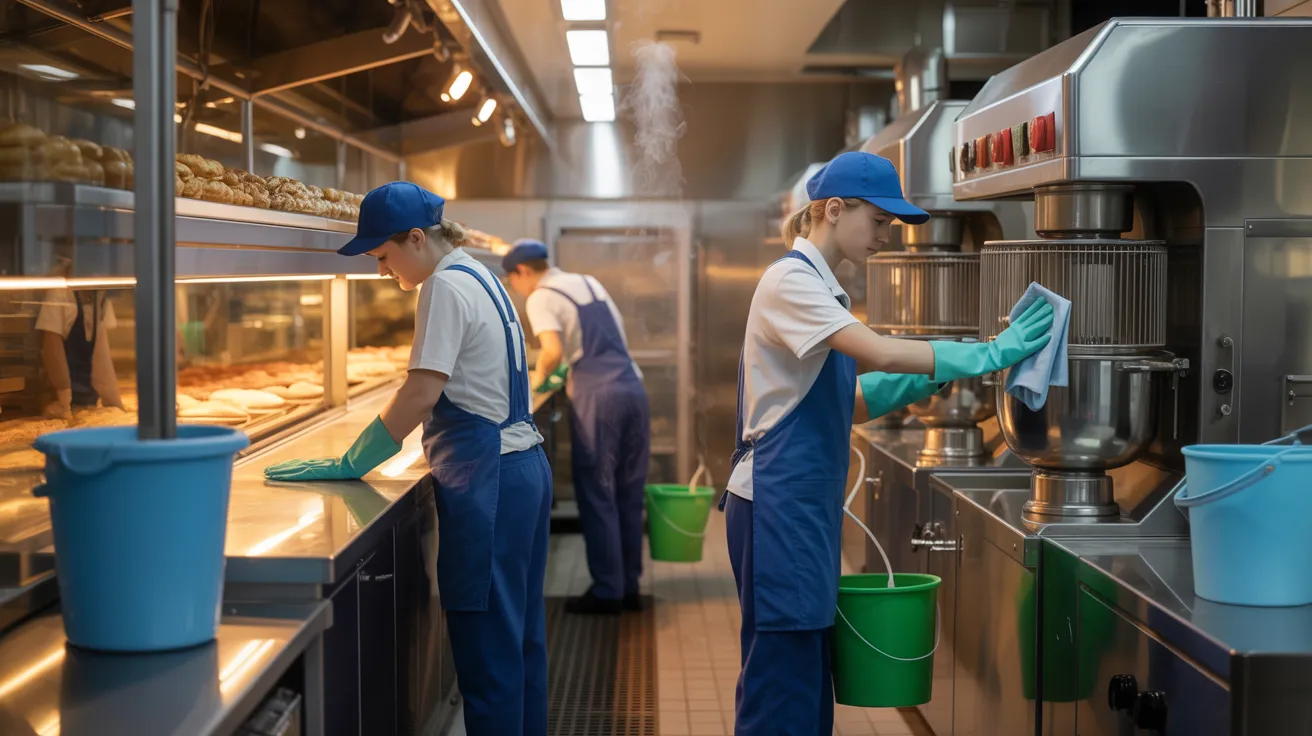
Expect Brampton cleaning experts to target kitchens, floors, and restrooms because each area carries unique food safety, accident prevention, and public health risks. In industrial kitchens, you need grease removal from cooking stations, appliance surfaces, drain systems, preparation areas, and backsplashes to reduce bacterial growth and pest activity.
Professional floor upkeep with documentation is consult this source also included. is also provided as part of the service.
For restroom sanitation, cleaners disinfect touchpoints, fixtures, partitions, dispensers, and waste containers, then replace products and reduce odor. They also service restaurant moprooms, where chemical storage, sink hygiene, and drainage conditions can affect sanitation compliance and staff safety daily.
How Food Safety Cleaning Benefits Brampton Operations
Brampton businesses need to implement food-safe cleaning standards for meeting legal standards and obtaining approval. You also reduce bacterial spread through proper cleaning of food-preparation surfaces, appliances, and frequently-touched items. Most importantly, you help protect public health by lowering the risk of foodborne illness in your facility.
Health Code Compliance
Brampton food establishments must comply with mandatory safety protocols, so food safety cleaning is vital to meeting health codes, defending customers, and sidestepping penalties. You must maintain sanitized food contact points, recorded sanitation plans, safe chemical management, and verifiable staff procedures that meet municipal and provincial inspection expectations.
During inspections of your operation, inspectors evaluate if your cleaning procedures ensures safe storage, tool sterilization, refuse management, and washroom maintenance.
Contamination Control
Meeting health code standards also depends on your ability to prevent cross-contamination during routine food preparation and sanitation. You must keep raw items away from prepared dishes, clean work areas after each use, and store chemicals away from food-contact items. Established guidelines minimize contamination chances and support consistent compliance during inspections.
You might establish allergen separation to stop main allergens from reaching common areas, containers, or machinery. Apply separate boards, color-marked equipment, and rigorous tool identification so staff don't mix items during preparation or service. Enforce washing hands following uncooked meat, fish, egg products, or allergens. Swap cleaning rags frequently, and check sanitizer strength with test strips. When you train staff to follow these controls each shift, you create a cleaner, safer operation that matches Brampton's safety requirements every day.
Public Health Protection
When food safety cleaning deteriorate, you don't only risk a failed inspection—you expand the chance of foodborne illness striking customers, staff, and the larger Brampton community. You also weaken your role in safeguarding community wellness, especially in busy food facilities where pathogens travel quickly through surfaces, equipment, and touchpoints.
You must implement sanitation protocols that eliminate contaminants, properly disinfect, and ensure effectiveness. This involves maintaining contact periods, deploying approved disinfectants, maintaining records, and training employees to fulfill health-unit expectations. These actions support pathogen control by suppressing pathogens before contaminating food or hands. In Brampton, effective cleaning shields vulnerable populations, minimizes disease spread, and demonstrates accountability. When you adhere to proper protocols, you go beyond regulations—you substantially reduce risk and promote secure food service throughout the city.
How Can Cleaning Practices Ensure Food Safety Compliance?
Maintaining rigorous cleaning routines promotes food safety compliance by reducing contamination risks, controlling pathogen growth, and keeping your facility aligned with sanitation requirements under HACCP-based programs and public health regulations. You ensure that food-handling surfaces appear visibly clean and microbiologically controlled, enabling documented preventive controls and inspection readiness.
Diligent cleaning further enhances allergen mitigation by extracting residues that can lead to undeclared allergen exposure. When you integrate verified sanitation methods with safety training, your staff can follow uniform procedures, employ approved chemicals correctly, fill out documentation properly, and handle variations prior to problems worsen. Systematic cleaning supports supply chain documentation, validates corrective actions, and shows responsibility throughout audits. Moreover, it supports you preserve quality assurance, preserve operational adherence, and minimize the possibility of punitive measures, market recalls, formal complaints, and avoidable public health risks.
What's the Ideal Time to Arrange Commercial Cleaning?
Plans for cleaning work most effectively when created based on risk, production volume, and regulatory requirements instead of just a predetermined calendar.
Facilities [[hosting promotions, catering, or public functions
How Do You Choose Brampton Cleaning Experts?
Screen providers initially by their food hygiene standards—not budget alone. You need to confirm that every company meets CFIA, public health, and HACCP-aligned expectations for your operation. Demand proof of insurance, WHMIS compliance, training records, and management systems. Evaluate technician knowledge of cross-contamination risks, chemical safety, and documented sanitation practices.
Additionally, you need to evaluate service dependability and accountability. Obtain references from food facilities in Brampton, then review service speed, corrective-action procedures, and communication standards. Verify the company supports supplier audits and can deliver compliance-ready records when inspectors or external parties need proof. Verify equipment upkeep, color-coded equipment are applied correctly, and location-specific dangers are identified. A qualified provider ensures compliance, product quality, and your brand reputation.
What does a Food Safety Cleaning Plan encompass?
Create a documented strategy that clearly outlines every sanitation duty, guideline, and expectation before production starts. You should list cleaning frequencies, approved chemicals, dilution rates, contact times, tools, and verification methods for each zone, surface, and piece of equipment. Don't forget to add pre-operational inspections, corrective actions, and employee training requirements.
Your plan should also address contamination prevention, garbage management, pest control procedures, and recorded timelines for bathrooms, drainage systems, surfaces, and food-preparation zones. Detail how you'll separate raw and ready-to-eat processes, enable ingredient tracking, and ensure accurate allergen labeling through validated cleaning between product changes. You should assign accountability, maintain signed records, and compare results against regulatory standards, HACCP controls, and customer requirements. When gaps appear, update procedures immediately and re-educate staff.
Frequently Asked Questions
Do sanitation providers operate during overnight shifts at Brampton facilities?
If you manage regulated spaces, you'll also require records that support audits and maintain assurance.
Do sanitation professionals offer hazard containment services?
Yes, you can find many Brampton cleaning professionals offering emergency response options. They manage hazardous materials, assess dangers, contain affected areas, and perform swift decontamination to minimize risk and limit operational impact. You should confirm timeframes, certifications, safety measures, and disposal methods. If your facility needs compliance, choose a service that documents incidents, follows procedures, and supports audits.
Are eco-friendly disinfectants safe for food-handling equipment?
In essence, green disinfectants remain safe for food-contact surfaces provided you choose items marked food-safe that comply with regulatory compliant. Verify contact times, mixing proportions, and rinse requirements ahead of deployment. Natural-based solutions decrease chemical burden, although you require confirmation of performance against relevant pathogens. To keep surfaces without residue, implement exact manufacturer guidelines and validate the disinfectant adheres to relevant food safety standards.
Do sanitation programs permit seasonal variations?
Absolutely, maintenance plans can be customized for seasonal production changes. Adapt frequencies, labor allocation, disinfectants, and validation steps to fit seasonal patterns while preserving regulatory compliance. Reduce equipment downtime through timing cleaning around production shifts, maximum output, and usage patterns. Additionally update SSOPs, employee training, and facility monitoring to account for periodic risks, emerging allergens, or higher contamination levels. Continuous reviews ensure your program efficient.
Do commercial cleaners educate employees on sanitation best practices?
Yes, commercial cleaners often train your staff on hygiene standards. You receive employee instruction on proper chemical use, contact times, cross-contamination prevention, equipment disassembly, and record keeping. They generally follow training with HACCP, GMP, and CFIA or regional health department regulations. Many also conduct sanitation audits to confirm adherence, spot deficiencies, and strengthen remedial steps. This helps you sustain uniform processes, succeed in audits, and minimize contamination hazards regularly.
Conclusion
When you work with Brampton food safety and commercial cleaning experts, you aren't merely cleaning—you maintain your facility audit-prepared and your protocols above board. From processing areas to kitchen spaces, every polished surface and maintained area helps reduce unwelcome guests and prevent costly setbacks. By scheduling service at the right intervals and following a clear cleaning plan, you protect staff, customers, and your reputation. In a strict regulatory setting, sanitary conditions aren't optional—they're part of doing business right.